I’m opening up about this because it has been a hard journey of self-discovery for the last few years. It took a series of unwise and toxic relationships, a few years of self-medicating by having drinks almost every day, and finally cutting the cord on how much work and other people were allowed to dominate my life to really start focusing inward and working on this.

I’m saying this out loud, partly to let people have a bit more understanding of me and people like me, but also to maybe help someone else who hasn’t yet realized these same things about themself. Yes, I’ve been to therapy. I was told by a few therapists that I don’t have an actual ‘mental illness’, I have childhood trauma that has caused a form of PTSD. Being able to know what it is has helped me help myself. I can’t take a pill to help it. I have to deal with it in my brain pretty much daily if I don’t want it to take control of my life.
To be honest, I don’t remember most of the details of my childhood. This is a common defense response in people who suffered abuse. I had a stepfather who was pretty terrible to me during my formative years, and I have a few specific incidents that stay in my catalogue of memories that I can relate if asked, but many of them are just woven into the fabric of my brain, and not really stories I can tell as a narrative. I just know I spent most of my childhood feeling like I could be in a lot of serious trouble without warning for things that were just normal kid behavior (like talking too loud, leaving a light on by accident, forgetting a chore, and more than once just for reading in my room when my presence was requested elsewhere) or I could be ridiculed in a sudden and humiliating manner for something natural I was doing or reacting to. There was some physical abuse disguised as discipline, but mostly I was just emotionally and mentally under attack without warning almost all the time when he was around. If you grew up like that, and you survived it to be a relatively successful and productive adult, you might not understand how it changed you from who you might have been to who you actually are. It’s not something you can change back, but you have to learn to manage it for your own good.
I’ve been reading a lot about how childhood trauma, particularly when it comes from abuse, can cause a form of PTSD. When the world is unstable and dangerous while your personality is forming, you develop a heightened awareness of anything potentially dangerous around you. It is a defense mechanism to survive your childhood as a helpless person in constant danger. For me, noise, light, crowds and even just the wrong situation at an unplanned moment can trigger it. If a baby is crying in a restaurant, or a phone is ringing without being answered, other people show normal levels of annoyance, but I actually feel like I’m under a real and dangerous attack, and I panic. I get hot, my fear level goes up, and my anxiety is so high that I often feel like I’m shaking inside. If it happens on a TV show or a movie, I have to mute it until it’s over. Like if it doesn’t stop soon, I will actually lose my mind and run out screaming so I won’t die. I know if I verbalize it or show my distress, other people will think I am unreasonable, so I often have to actually just shut down as much as I can until it stops so I don’t seem unreasonable to other people, including my husband who just silently tolerates me if I verbalize it too intensely, which to me often feels like judging, and that makes my reaction even worse. Strangely, it can pass as fast as it happens once the source of the issue is away from me. Then I just feel unreasonable, bad, flawed and ugly about it in the aftermath.
This also happens in crowds where people are too close to me for too long and I feel like I am having a panic attack just trying to maintain my personal space, or when anything is too loud or light is too bright. I always just thought I was just very sensitive (which always seemed like a weakness to me), but it is actually more like people who have been in war-zones who go into full panic mode when someone sets off firecrackers or a car backfires.
All of this is apparently called ‘Hypervigilance’, which is “extreme or excessive vigilance : the state of being highly or abnormally alert to potential danger or threat.”(merriam-webster). It might result in a severe state of anxiety that eventually causes exhaustion, because the person experiencing it is constantly looking for danger in a particular situation. This is a fight or flight response that develops in childhood to protect you from the dangers in your home with your family. Some people are apparently like this all the time, which I imagine is absolutely miserable for them. With me, it is triggered by certain environments and situations, and I’ve largely learned to avoid situations that might make me feel that way as much as I can. Sometimes it can’t be avoided, however, and I have what probably seems like an unreasonable meltdown to anyone who is around when it happens.
If I get overwhelmed with too many things that I have to do, I sometimes get panicked that I will forget something. Because I am a full time college instructor and I run a theatre that doesn’t have the budget for a real staff, I am constantly working if I don’t just force myself to stop. I have gotten pretty good at managing everything, by keeping to-do lists for when I have a million balls in the air and can’t get finished with anything because other people won’t give me the information I need to cross something off, or I just run out of time that day and need to rest my head. I answer people who need things from me as immediately as I can to avoid a pileup at an inconvenient time. I can usually just move something to another day to finish and forget about it in that moment so I don’t get so overwhelmed with unfinished things on my mind that I melt down over it. Sometimes other people control the situation, though, and too many extra things are sprung on me at once that are unexpected and I don’t have time to sort them on my lists. Or people are in my face when a lot of things come up at the same time, and it throws off all my plans and I panic, and lash out or melt down because I can’t physically remove myself from the situation. It’s not completely unreasonable, because most people would be stressed by the amount of work that piles up on a person with 2 full jobs, but people without PTSD can walk away from it more easily or control the stress reaction more manageably. I can most of the time control it enough on the surface to get through the situation. Once in a while, I can’t. Then I spend days obsessing about how I upset someone over it.
The other thing that happens as a result of this PTSD is a hyper-awareness of other people’s reactions or feelings toward you. You develop an almost psychic sense of when someone is displeased or doesn’t like you, and it can be distressing in a way that most people would see as silly. I realized along the way that when someone didn’t like me or was upset with me, I would panic and spend an unreasonable amount of energy feeling upset about it, and trying hard to counter it by giving that person too much in an attempt to win them somehow. If I am slighted in a situation where I feel I should have been noticed, I often suffer hard for that emotionally for days. That’s a response to a parent (in my case, a step parent) always disapproving, showing disdain and never giving praise for any accomplishment. You grow up depending on other people’s opinions and reactions to let you know how you’re doing in the world, because you never really get a sense of how to gauge it on your own. On the other hand, one little accolade or nice thing someone says can feed my soul and keep me basking in sunlight for weeks, provided I don’t decide it’s not true and try to give the credit to everyone else. I’m happy to say that I”ve gotten much better at blocking out people who don’t like or approve of me, and moving on. I really have to work hard on the other part of this, though. Every time I’m triggered.

I know that this is part of my personality and my brain, and I cannot remove it. I know that the only reason I did not develop something worse is that I am naturally resilient, and for that, I am thankful. Knowing what it is helps me, and I have gotten to where I can control my responses, at least on the surface, most of the time. Sometimes I feel it terribly, but I’m able to not show it, which is a huge thing for me, and honestly that is the best I can hope for. Once in a while, I don’t do such a good job. I apologize to people who suffer or feel confusion when that happens. Trust me, when I mess up, I feel a lot worse about it for a lot longer than anyone who got caught in the crossfire. It’s a lifelong journey for anyone to work on themselves, and it’s no different for me, but I will keep working.
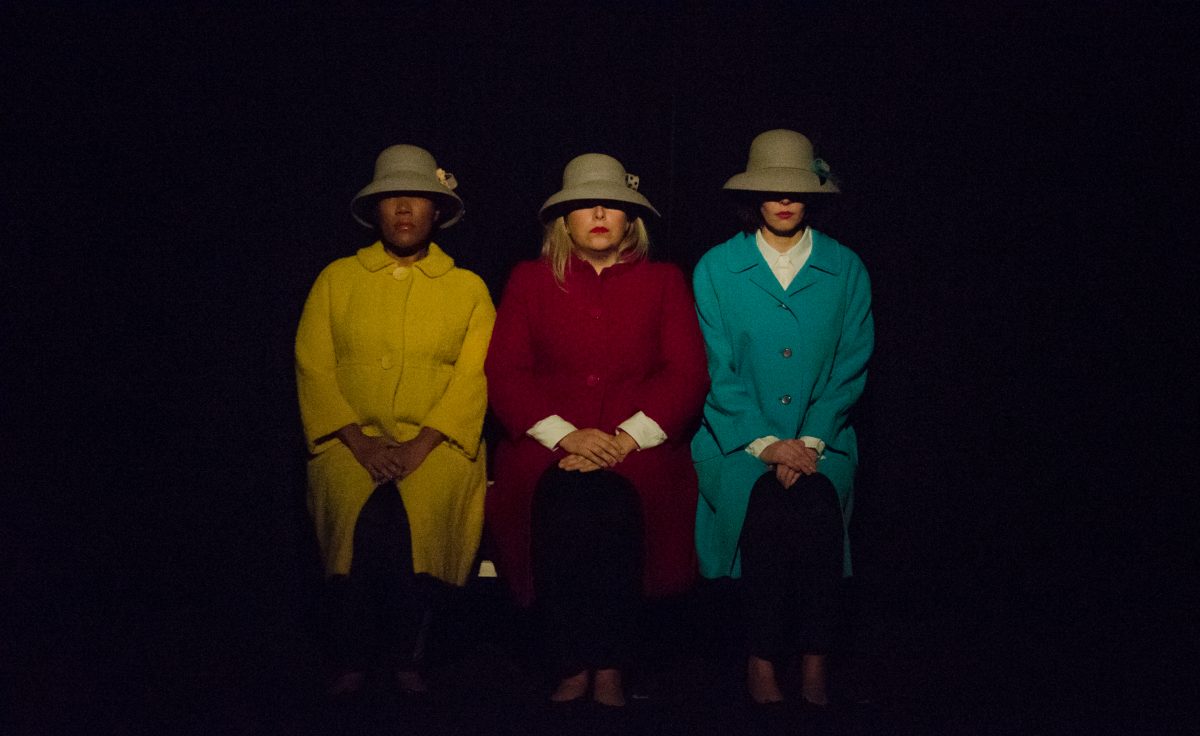
(photos courtesy of Mildred’s Umbrella Theater Company, by Anthony Rathbun, 2007).






 Lola's Umbrella